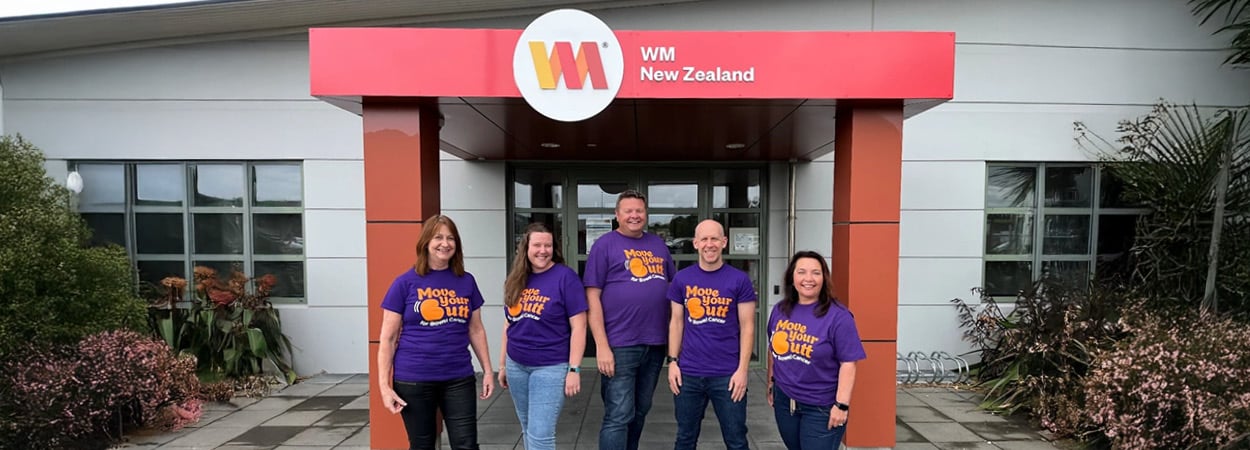
A group of team members from WM New Zealand’s Christchurch and Taranaki offices have taken meaningful steps to support bowel cancer awareness, taking part in this year’s Move Your Butt challenge.
Now in its second year for the team, the initiative brings people together to raise awareness and funds for a cause that has impacted many New Zealanders.
The challenge first began with three colleagues — Teresa Alexander, Paul Connor and Torika De Rooy — after bowel cancer touched their lives close to home. Since then, others across the Christchurch team have shared their own experiences, highlighting just how many people are affected.
This year, the team also walked in memory of former South Island General Manager Gareth James, who passed away in 2024 following his battle with bowel cancer.
Bowel cancer remains the second highest cause of cancer death in Aotearoa, with around 3,000 people diagnosed each year. Early detection makes a significant difference, with more than 90 percent of cases successfully treated when caught early.
Across the month-long challenge, the eight-person WM New Zealand team each walked more than 100 kilometres, collectively raising $1,927 and surpassing their original fundraising goal.
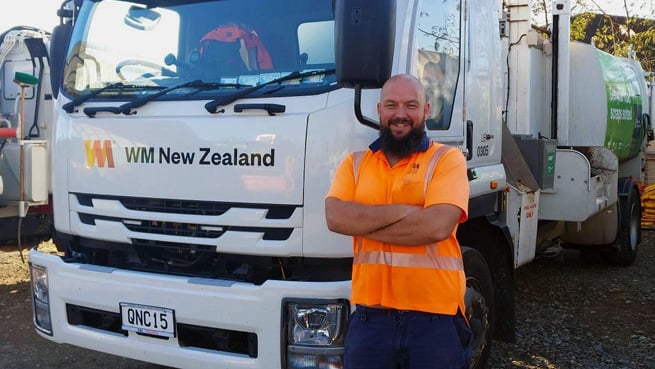
A special mention goes to Louise Petit, who completed an impressive 200 kilometres around Taranaki and raised the highest individual total within the team.
Efforts like these reflect the power of coming together — raising awareness, encouraging early detection and supporting those affected.
At WM New Zealand, taking care of it means supporting our people, our communities and the causes that matter.